


Introduction
Every device connected to the internet has a unique identity. This identity is called an IP address. Without an IP address, computers and websites would not know where to send information. In this guide, we will provide a simple explanation of IP addresses for beginners, covering how they work and why they are essential for the internet.
What Is an IP Address?
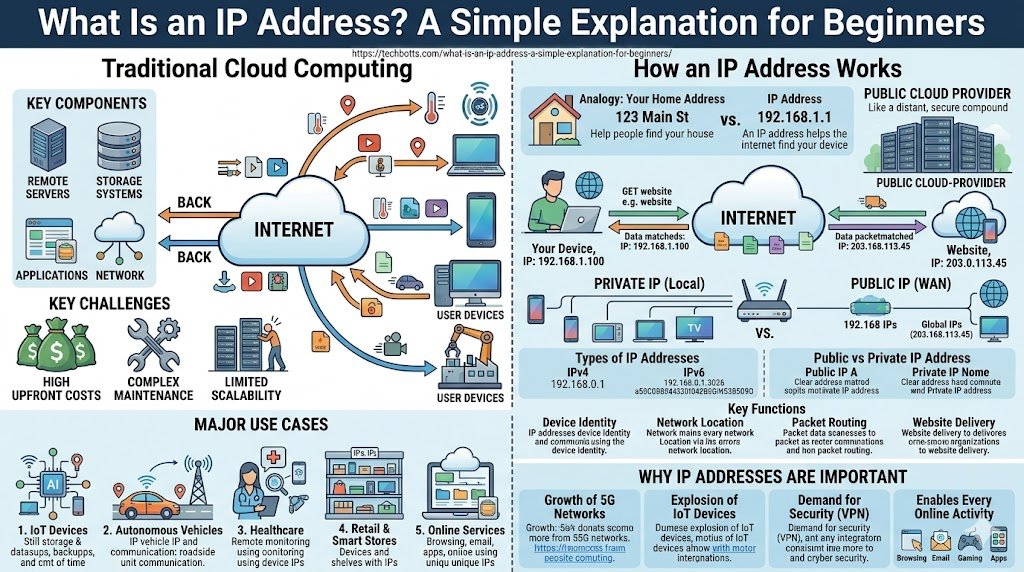
An IP address (Internet Protocol address) is a unique string of numbers assigned to every device on a network. It works exactly like a home address: your home address helps people find your house, while an IP address helps the internet find your specific device.
Example of a common IP address format:
192.168.1.1Why Is an IP Address Important for Networking?
IP addresses are the backbone of digital communication because they:
- Identify devices on a local or global network.
- Allow devices to exchange data packets accurately.
- Help websites deliver content to the correct user.
Types of IP Addresses: IPv4 vs IPv6
1. IPv4 (Internet Protocol Version 4)
This is the most common type, written as four sets of numbers separated by dots (e.g., 192.168.0.1).
2. IPv6 (Internet Protocol Version 6)
As the number of internet devices grows, IPv6 was created to provide more addresses. It uses a combination of letters and numbers, making it much longer and more complex than IPv4.
Public IP vs Private IP Addresses
A Public IP address is assigned by your ISP and is visible to the entire internet. A Private IP address is used within your local home or office network and is managed by your router.
Final Thoughts on IP Addresses
Understanding what an IP address is is a fundamental step for anyone interested in technology, cybersecurity, or networking. It is the core identity that allows the modern internet to function smoothly.
