


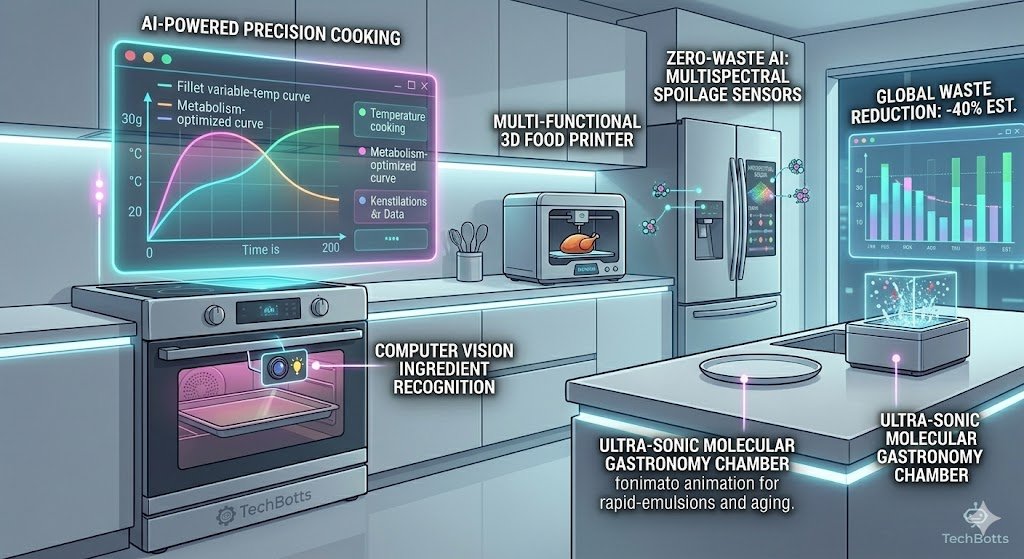
The year 2026 has officially moved the “Smart Kitchen” from sci-fi concept to a countertop reality. We are seeing a profound shift where AI-driven culinary assistants are not just suggesting recipes but actively managing nutritional intake based on real-time biometric data from your smartwatch. This is the era of “Precision Cooking,” where every meal is optimized for the individual’s metabolic needs.
Beyond simple automation, Molecular Gastronomy tools have become accessible to the home chef. Multi-functional “food printers” and AI-calibrated immersion circulators allow for textures and flavors once reserved for Michelin-star restaurants. These devices use ultrasonic technology to achieve perfect emulsions and rapid-aging processes for meats and plant-based proteins in minutes.
The integration of Computer Vision in smart ovens now allows appliances to “recognize” ingredients. If you place a seasoned fillet in the oven, it identifies the cut, weight, and fat content, then applies a variable-temperature curve to ensure the internal temperature is hit within a 0.5-degree margin of error.
Sustainability is also baked into the tech. Smart refrigerators now use multispectral sensors to detect the earliest stages of spoilage—often days before the human nose can—and automatically suggest recipes to use those ingredients before they go to waste. This “Zero-Waste” AI is cutting household food waste by an estimated 40% globally.
