


Fashion is no longer just about aesthetics; it is a rapid test bed for material science and connectivity. The convergence of Smart Fabrics and Wearable Tech is fundamentally changing how we interact with our clothing and how we address sustainability.
In 2026, clothing is transitioning from passive protection to active interfaces. Major innovation drivers include:
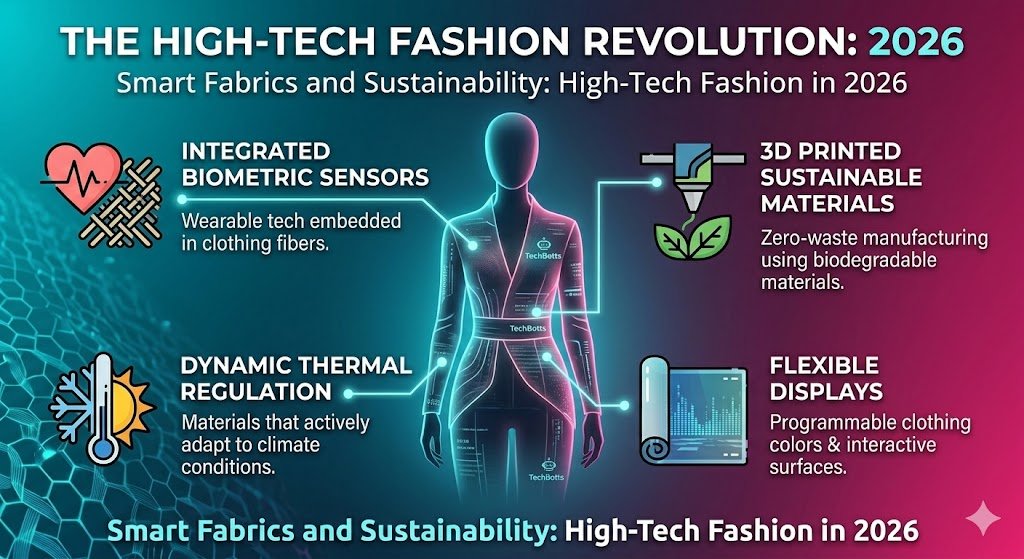
- Integrated Biometric Sensors: Your next jacket won’t just track your steps; it can monitor your hydration levels, posture, and even detect stress patterns based on sweat analysis, syncing the data directly to your health app.
- Dynamic Thermal Regulation: Smart fabrics embedded with phase-change materials are creating clothing that actively warms or cools the wearer, radically reducing the energy needed for climate control.
- 3D Printed Sustainable Materials: The industry is moving away from traditional textiles toward biodegradable 3D printed materials. We can now “grow” or print entire garments on demand, completely eliminating traditional textile waste.
For TechBotts readers, this intersection is a vital trend: fashion is becoming an essential component of personal technology.
