


Introduction
Edge computing is revolutionizing real-time technology by processing data closer to the source, such as IoT devices, sensors, mobile phones, or local servers. This approach reduces latency and improves performance compared to traditional cloud computing.
In this article, we explain what edge computing is, how it works, key use cases, and why it is becoming a critical part of modern IT infrastructure.
What Is Edge Computing?
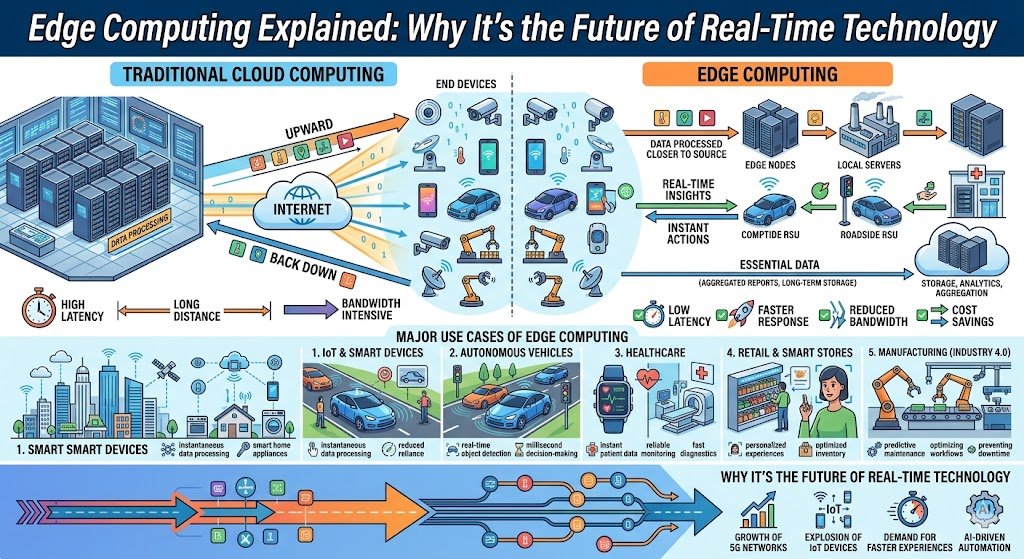
Edge computing is a distributed computing model where data is processed near the location where it is generated. This minimizes delays, reduces bandwidth usage, and enables real-time insights.
Edge Computing vs Cloud Computing
- Cloud computing: Data → internet → central data center → processed
- Edge computing: Data → nearby device/server → processed instantly
Edge computing does not replace cloud computing—it complements it for speed and efficiency.
How Does Edge Computing Work?
- Devices (IoT sensors, cameras, machines) generate data
- Edge devices or local servers process the data instantly
- Essential data is sent to the cloud for storage or analysis
This hybrid model allows businesses to balance speed, cost, and efficiency.
Major Use Cases of Edge Computing
1. Internet of Things (IoT)
- Smart homes, smart cities, and industrial IoT process sensor data instantly
- Reduce cloud dependency
- Improve reliability
2. Autonomous Vehicles
- Real-time object detection
- Navigation without internet delays
- Improved safety
3. Healthcare
- Remote patient monitoring
- Real-time medical device data
- Faster diagnostics at hospitals and clinics
Final Thoughts
Edge computing is shaping the future of real-time technology. It enables faster responses, efficient data processing, and supports smart innovations in various industries.
